The Heartbeat of AI
Data Centers and Fiber: The Infrastructure Behind the AI Boom
March 19, 2026
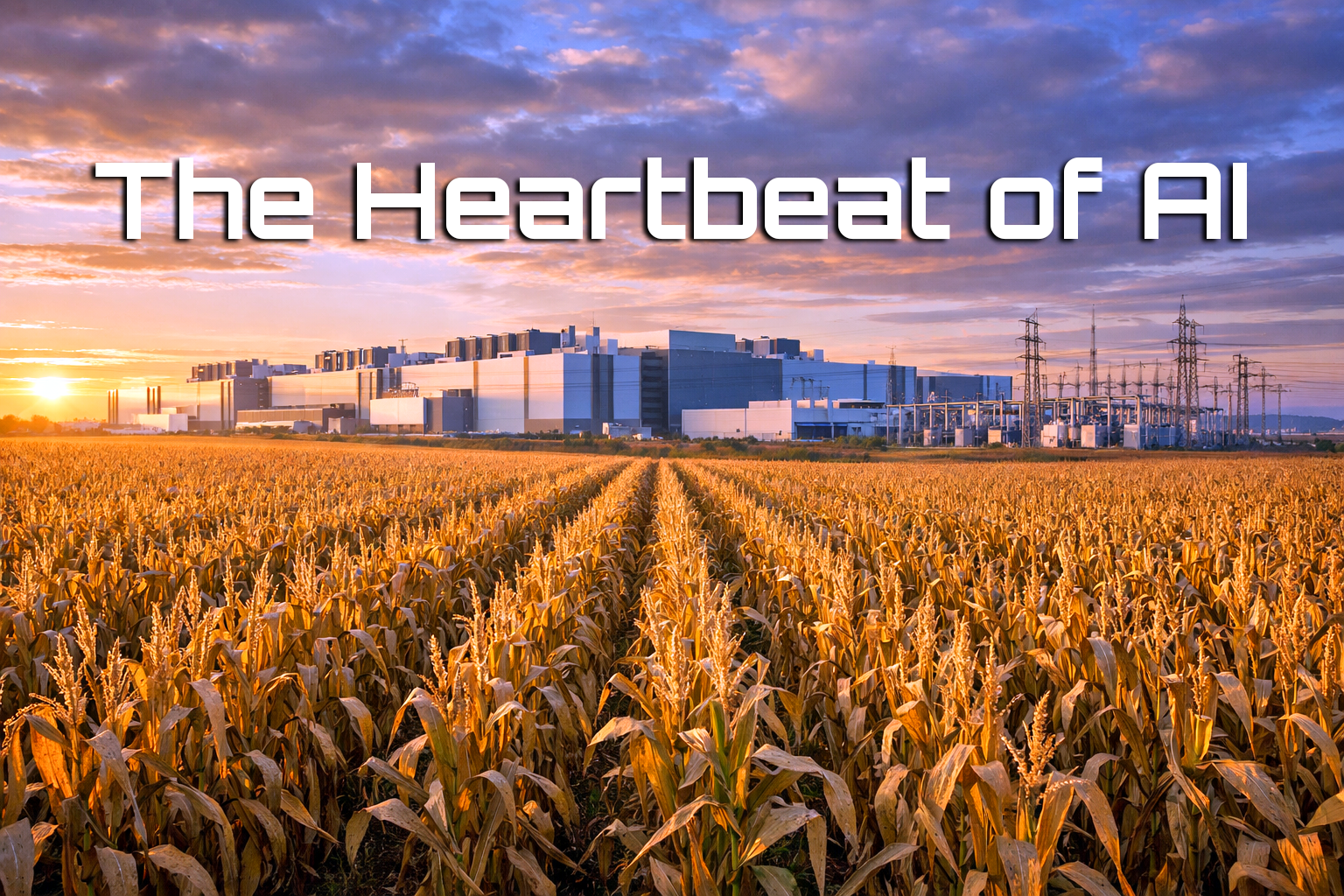
If you drive along the southern edge of Cedar Rapids, Iowa, near the airport, you can see the future of digital infrastructure taking shape.
Construction activity is hard to miss. Massive buildings are rising from once-open land—structures that will soon house thousands of servers, miles of cabling, and enough computing power to support the next generation of cloud services and artificial intelligence. Google is expanding its presence in the area. QTS Data Centers is building a major hyperscale campus nearby. And just a few miles north in Palo, Amazon Web Services has announced plans for another large facility.
What’s happening in Cedar Rapids is part of a much larger story unfolding across the country. The United States now hosts more than 5,000 data centers, nearly double the number operating a decade ago. Hundreds more are currently under construction or in planning stages as cloud computing, artificial intelligence, and edge technologies drive unprecedented demand for digital infrastructure.
The AI and Cloud Expansion
The explosive growth in data centers is largely driven by the rapid expansion of hyperscale cloud providers such as Amazon Web Services, Microsoft Azure, Google Cloud, and Meta. These companies operate enormous facilities designed to deliver computing, storage, and AI capabilities at global scale.
The number of hyperscale data centers worldwide has grown from roughly 250 in 2015 to nearly 1,000 today, and the pace of construction continues to accelerate.
Artificial intelligence is intensifying this demand. AI training clusters rely on thousands of GPUs working together simultaneously, generating enormous amounts of east-west traffic within data centers and between regional facilities. To support that level of performance, hyperscale campuses require massive network capacity and extremely low latency.
The result is a new generation of infrastructure where connectivity is just as important as computing power.
A modern hyperscale data center may consume 50 to 100 megawatts of power, while the largest AI-focused campuses can exceed 200 megawatts or more. These facilities depend on fiber not only to connect users to the cloud but also to move data between servers, clusters, regions, and edge locations.
Without fiber’s ability to move vast amounts of information quickly and reliably, the AI revolution simply wouldn’t be possible.
Fiber: The Backbone of Digital Infrastructure
“This isn’t your parents’ broadband anymore.”
The industry used to talk almost exclusively about “broadband.” Today the conversation is shifting toward something bigger: digital infrastructure.
It’s a recognition that modern connectivity isn’t just about getting a signal from point A to point B. It’s about the entire ecosystem that makes today’s digital economy possible—fiber networks, cloud platforms, hyperscale data centers, wireless systems, and edge computing environments all working together.
While data centers are often defined by the computing power inside their walls, their real value comes from how well they connect to the rest of the world.
Fiber provides the bandwidth and low latency required to move enormous volumes of data between facilities, networks, and users. In hyperscale environments, thousands of fiber connections link servers, switches, storage systems, and optical transport equipment. Beyond the data center walls, regional fiber routes connect facilities to cloud regions, carrier hotels, and long-haul transport networks.
This architecture allows cloud providers to distribute workloads, replicate data across regions, and deliver services to users in real time.
It also explains why data center development often clusters around areas with strong power availability and access to major fiber routes. Secondary markets such as Iowa, Ohio, and Arizona are becoming key locations for hyperscale campuses because they combine reliable energy infrastructure with strategic network connectivity.
Cedar Rapids is a perfect example of how these factors come together.
A New Strain on the Fiber Supply Chain
The rapid expansion of data centers and AI infrastructure is also creating ripple effects across the broader telecommunications supply chain—particularly when it comes to fiber.
For years, fiber deployment has been accelerating to support broadband expansion, 5G networks, and government initiatives such as BEAD. Now, the explosive growth of hyperscale data centers and AI workloads is adding another major source of demand.
Large-scale data center campuses require enormous amounts of fiber, both inside the facility and across the networks that connect regions and cloud availability zones. In many cases, thousands of fiber connections are needed within a single campus, while long-haul fiber routes must be expanded to support the massive flows of data moving between facilities.
The result is growing pressure on fiber manufacturing and deployment capacity. Across the industry, providers are reporting longer lead times and a growing backlog of orders as demand continues to climb.
For network builders and infrastructure partners, this environment places a premium on planning, supply chain coordination, and the ability to deliver materials and equipment where and when they are needed.
As the buildout of hyperscale data centers and digital infrastructure accelerates, ensuring the availability of fiber will remain one of the critical challenges—and opportunities—facing the industry.
From Cloud to the Edge
At the same time hyperscale facilities are expanding, the computing landscape is also moving closer to users.
Applications such as autonomous systems, real-time analytics, and AI-powered services require processing that happens near the edge of the network. This has created demand for smaller regional data centers and edge computing facilities that reduce latency and bring cloud capabilities closer to communities and businesses.
Together, hyperscale campuses, regional data centers, and edge facilities form a distributed digital ecosystem—one that depends on resilient, high-capacity fiber networks to function.
As these networks grow more complex, building and maintaining them requires coordination across multiple layers of infrastructure: materials, logistics, integration, and deployment.
Enabling the Infrastructure Buildout
Supporting this new wave of digital infrastructure requires more than just technology—it requires partners capable of helping networks scale quickly and reliably.
For more than 50 years, KGPCo has worked alongside communications and technology companies to build and maintain the networks that connect the world. From fiber materials and optical networking equipment to integration services and advanced supply chain solutions, the company supports large-scale infrastructure deployments across North America.
Today, those capabilities are increasingly important as cloud providers, service providers, and contractors work to deliver the connectivity required for hyperscale data centers and edge computing environments.
Large infrastructure projects demand precise coordination: equipment must be sourced, staged, integrated, and delivered on tight timelines. Fiber networks must be extended to new campuses. Optical and IP networking equipment must be configured and deployed efficiently. And every component must be ready to perform at scale.
By combining supply chain expertise, integration services, and nationwide logistics capabilities, KGPCo helps customers accelerate these complex deployments and keep projects moving forward.
Building the Future of Connectivity
The cranes rising above Cedar Rapids are a reminder that the digital economy is built on physical infrastructure.
Artificial intelligence, cloud computing, and edge technologies may feel intangible to the people using them, but behind every application and service is a network of fiber routes, servers, switches, and data centers working together to move information at incredible speeds.
As demand for computing power continues to grow, the infrastructure supporting it will grow as well—connecting new data centers, expanding fiber networks, and enabling the next generation of digital services.
From hyperscale campuses to regional edge deployments, one thing remains constant: the networks that power the future will depend on fiber.
And the companies helping to build and support those networks will play a critical role in shaping the digital landscape for years to come.
Where KGPCo Fits In
As the pace of digital infrastructure investment accelerates, success will depend on more than access to technology—it will hinge on execution. That’s where KGPCo stands apart. With more than five decades of experience, a nationwide footprint, and a fully integrated model spanning advanced supply chain, network integration, and deployment support, KGPCo delivers the scale, precision, and reliability required to turn complex infrastructure plans into operational networks. From sourcing critical fiber and equipment to staging, testing, and delivering ready-to-deploy solutions, KGPCo enables customers to move faster, reduce risk, and build with confidence. In an environment where timing, coordination, and performance are everything, KGPCo isn’t just supporting the buildout of digital infrastructure—it’s helping make it possible.
Ready to Move Forward?
contactkgp@kgpco.com | www.kgpco.com | +1 (800) 328-5142
Let’s build the future of connectivity—together.